

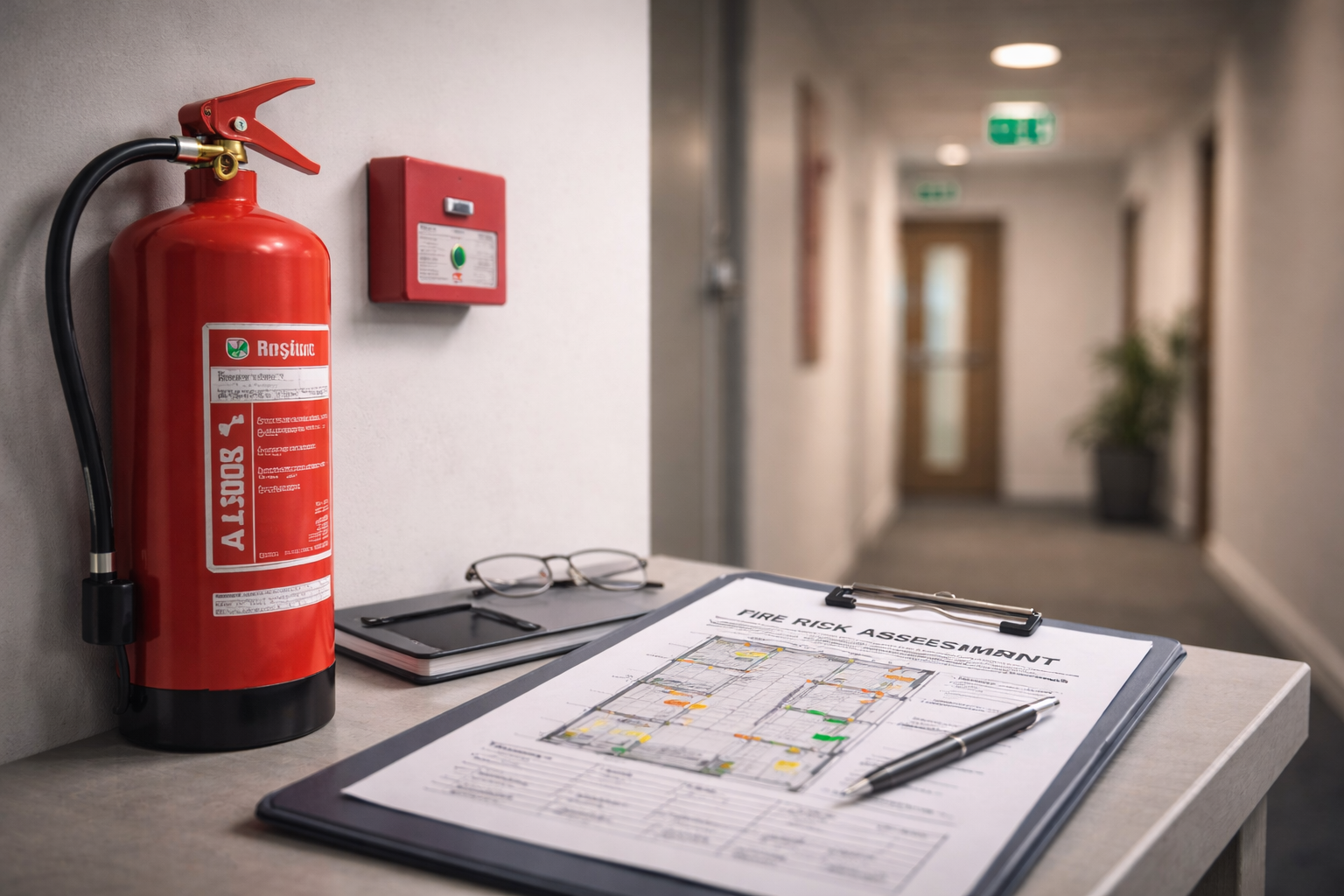
Fire Risk Assessments – Cardiff & Vale of Glamorgan
NEBOSH-qualified Fire Risk Assessor serving landlords, HMOs, commercial premises and blocks of flats across Cardiff, Penarth, Barry, the Vale of Glamorgan and wider South Wales, including Newport, Bridgend, Neath Port Talbot and the Valleys.
Who needs a Fire Risk Assessment?
Under the Regulatory Reform (Fire Safety) Order 2005, you are legally required to have a current FRA if you are responsible for:
• HMOs (Houses in Multiple Occupation)
• Commercial premises (offices, shops, restaurants, workshops)
• Communal areas of blocks of flats
• Care premises and guesthouses
• Any non-domestic building
Cardiff Council requires a current FRA as part of HMO licensing.
We cover the whole of South Wales. Jobs outside Cardiff & the Vale of Glamorgan carry a travel charge of 45p per mile, confirmed upfront as part of your quote.
What’s included
•Full on-site fire risk inspection
•Detailed written report with photographs
•Identification of fire hazards and persons at risk
•Action plan with prioritised recommendations
•Annual review reminders



Single Residential Let
Fire Risk Assessment for single-occupancy rentals. Includes full report, photos, and lodgement.
Larger HMO (7+ beds)
Multi-floor properties with detailed compartmentation review.
Standard HMO (3-6 bed)
Required for HMO licensing in Cardiff. Annual review reminder included.
Small Commercial Premises
Offices, shops, workshops, restaurants. Insurance and licensing compliant.
FAQs
Do I legally need a Fire Risk Assessment?
1
Yes, if you’re the “responsible person” for any non-domestic premises or any building with shared/communal areas. Under the Regulatory Reform (Fire Safety) Order 2005 and the Fire Safety (England) Regulations 2022, this includes landlords of HMOs, blocks of flats, commercial premises, care premises, and any building with paying guests. Single-let domestic properties don’t legally require an FRA, but most landlord insurance policies and lenders now expect one.
How often should a Fire Risk Assessment be reviewed?
2
Best practice is annually, or sooner if there’s a material change — refurbishment, change of use, new tenants in a HMO, alterations to fire doors or escape routes, or after a fire-related incident. Cardiff Council expects HMO landlords to keep their FRA current as part of licensing conditions.
An EPC measures a property’s energy efficiency. A Fire Risk Assessment identifies fire hazards and the people at risk, then sets out an action plan to mitigate them. They’re completely separate legal requirements. Many landlords need both — and we offer £30 off when you book them together.
What’s the difference between an EPC and a Fire Risk Assessment?
3
How long does a Fire Risk Assessment take?
4
A single residential let or small commercial unit takes around 45-60 minutes on site. A 3-6 bed HMO takes 1-2 hours. Larger HMOs, blocks of flats, and complex commercial sites take 2-4 hours. The written report is typically delivered within 48 hours.